Facial dark spots: how to remove them with laser
How the laser acts on sun and age spots, how many sessions are usually needed and how to stop them coming back.
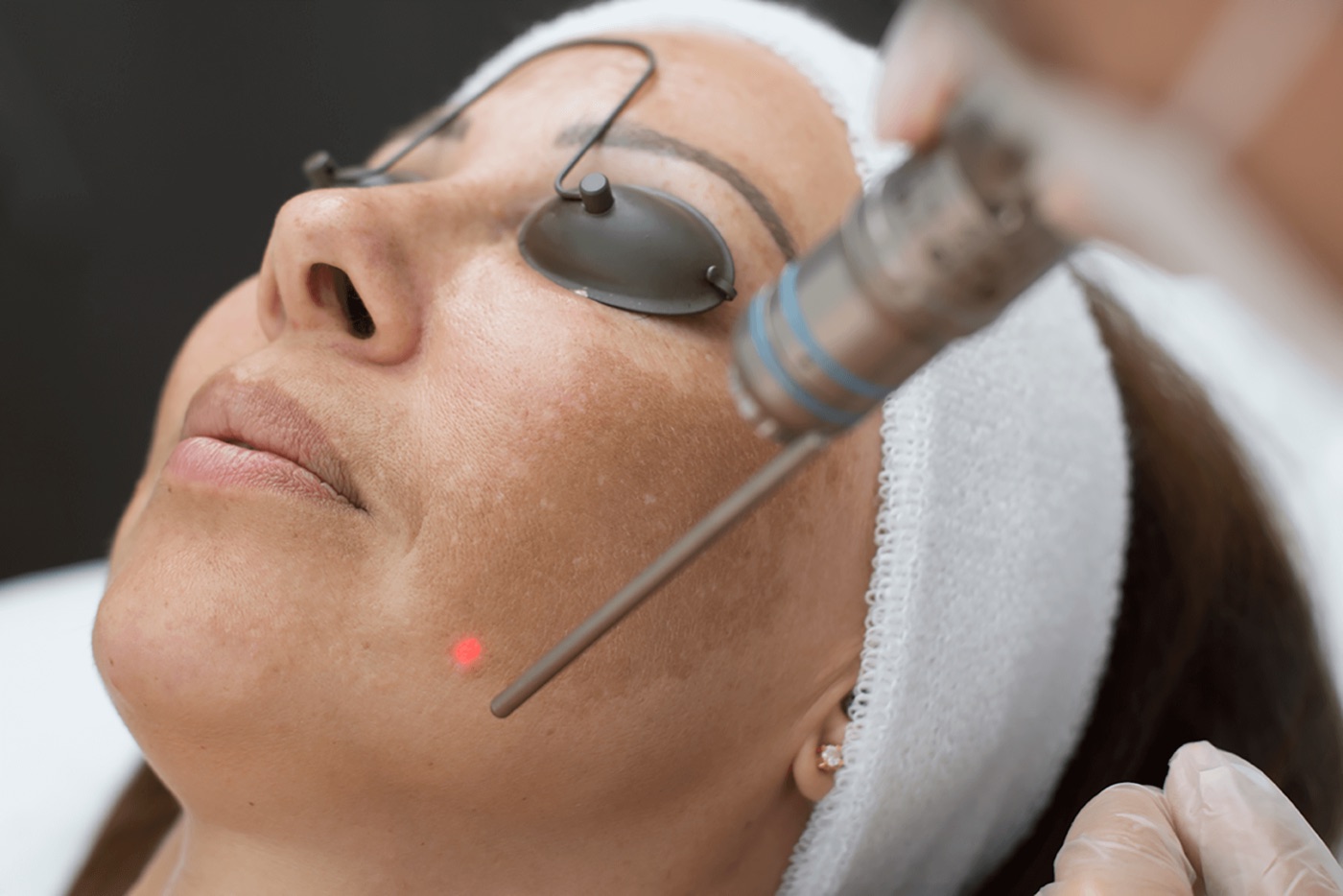
Facial dark spots —solar lentigines, age spots and other hyperpigmentation— appear mainly from sun accumulated over the years. The laser acts selectively on excess melanin to lighten them while sparing the surrounding healthy skin.
How does the laser work?
A selective laser (for example Q-Switched) emits pulses that break up the accumulated pigment; the body clears it naturally over the following days. After the session, the spot usually darkens slightly and forms a thin crust that flakes off within a few days, leaving more even skin.
How many sessions do I need?
It depends on the type, number and depth of the spots and on your phototype. Well-defined solar lentigines often respond in a few sessions; other hyperpigmentation needs more. Sessions are usually done once every 2-3 weeks, so the skin recovers between them. The estimate is made at the assessment.
Safety by skin type
Not all spots or all skin react the same. Darker phototypes carry a higher risk of post-inflammatory hyperpigmentation, so it's key to adjust the settings, prepare the skin and follow aftercare. For safety, it's important to rule out that the spot is of another kind before treating it; if there is any doubt, it is referred for medical review.
Aftercare and how to prevent recurrence
The sun is the main cause, so sun protection is essential: SPF 30 or higher daily, avoiding exposure during the peak hours of the day and not scratching or exfoliating the treated area. With good photoprotection habits the result lasts much better and fewer new spots appear.
Where to treat them
Treatment should be performed by qualified staff after assessing the skin. At Impuls Longevity (Barcelona) we work with a selective laser and design a personalised protocol based on the spot type and your phototype.
Sources
Links to reference organisations for further reading. Educational content, not a substitute for a medical assessment.
Book your assessment
Tell us about your case and our team will design a personalised protocol for you.